Español
 Français
 Deutsch

Around this time of year, when the mills start pressing the olives from the new harvest, I get lots of questions about unfiltered olive oil. Is it healthier? Is it better? Why is it cloudy? That’s hardly surprising, because every year you see it in more shops and people talk about it more. So I thought I’d tell you what I know, without overselling it or running it down.
What is unfiltered olive oil?
When the olives are crushed at the mill (if you’re curious about how the oil is extracted, I explain it in the article on first cold pressed olive oil), the oil that comes out carries tiny bits of olive pulp and a little water. Normally it is left to settle and then filtered before bottling, which leaves it clear and bright, the way we’re used to seeing it. Unfiltered oil is bottled without going through that filter. That’s why it looks cloudy, and why a little sediment gradually forms at the bottom of the bottle.
Here’s something many people don’t know: it isn’t a separate category of oil. An unfiltered oil can be extra virgin in exactly the same way as a filtered one, as long as it meets the same quality requirements. So if you’re looking for an unfiltered extra virgin olive oil, the first thing to check is that it’s extra virgin. Filtered or unfiltered comes second.
And don’t confuse it with oil that turns cloudy in winter. Any olive oil, filtered or not, can go cloudy or even partly solid when it gets cold, usually below about 10 °C. That’s completely normal and harmless: it clears again as soon as it warms up to room temperature. Unfiltered oil, on the other hand, stays cloudy whatever the temperature, because of the bits of olive pulp it contains.
Unfiltered vs filtered olive oil: what’s the difference?
Where you notice the difference most is on the palate. Unfiltered oil tends to have more body and more intense aromas of green olive, grass and tomato leaf, and the bitterness and pepperiness are more noticeable. It’s an oil I really like, especially in the first few weeks of the harvest.
That said, don’t believe the idea that it’s better than filtered oil, because it isn’t. It’s different. A good filtered extra virgin will always beat a mediocre unfiltered one, because in the end what sets the quality is the olive and how the oil has been made, not whether those bits of pulp are still in it.
Is unfiltered olive oil good for you?
Yes, if it’s a good oil. What it has going for it is above all flavour and freshness. It’s bottled right at the start of the harvest, often from early harvest olives, and it’s the closest thing to tasting oil straight from the mill. That’s why it is sometimes also called green unfiltered olive oil.
When it comes to health, you have to be more careful about what you say. Early harvest oils usually contain more polyphenols, but that depends on when the olives are picked, not on whether the oil is filtered. Some studies suggest that unfiltered oil starts off with slightly more of certain phenols, and also that it loses them sooner. My advice is to buy it because you like the taste, not because it’s healthier.
How long does unfiltered olive oil last?
This is its weak point. The bits of pulp and moisture it keeps make it oxidise sooner, and if too much time passes, the sediment at the bottom can ferment and spoil the flavour. So it isn’t an oil to keep from one year to the next. Ideally, use it within the first few months after the harvest.
If you buy it, keep it somewhere cool and dark, away from the cooker and the window, and choose bottles you’ll get through quickly rather than a large container. The sediment isn’t a fault, it’s normal in this oil; if you don’t like it, pour gently without shaking the bottle. If you’d like more details on storage, I explain it in the article on how long olive oil lasts.
How to use unfiltered olive oil
I always use it raw, which is where you really appreciate it. On toast, in salads, in a salmorejo, drizzled over grilled vegetables or to finish a soup. I’d never fry with it: the heat takes away exactly what makes it different, and that’s not worth paying extra for.
The first time, try it on its own with a bit of bread. You’ll notice straight away how different it is from your everyday oil.
Where to buy unfiltered olive oil
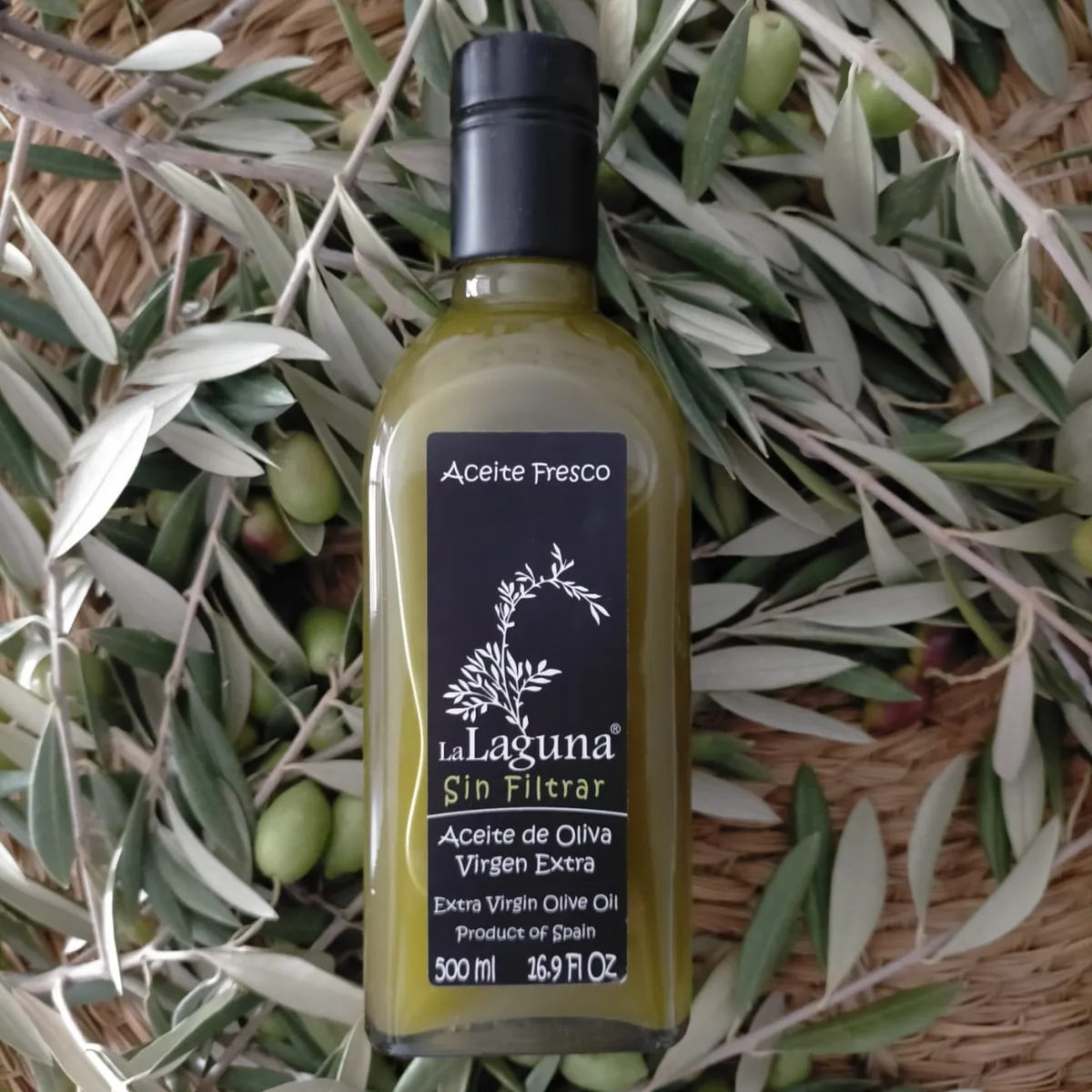
In our shop we have La Laguna Sin Filtrar from this year’s 2026/27 harvest, in boxes of six 500 ml glass bottles, sent straight from the mill so that it reaches you as fresh as possible.

Conclusions
Unfiltered olive oil is the new harvest’s oil just as it leaves the mill. It has more flavour and more character than filtered oil, but it isn’t better or healthier, and it doesn’t keep as long. If you fancy trying it, now is the time: use it raw and don’t leave it forgotten in the cupboard. And if you do try it, let me know what you think.